
The Hubert Projects App
Overview
Hubert is a company that prides itself on making delivery easy and seamless. With over 30,000 products in stock they are capable of shipping 98% of all orders within 24 hours. On average these orders are finalized within one day of receiving. But for larger orders, the timeframe required several additional days and the customer service teams wanted to know why.
I led the user experience and testing across a cross-functional team in order to craft an app that dramatically improved order check-ins across every single customer who used it.
Role:
Lead, UX designer
Team:
1 UX Designer, 2 Developers, 5 Customer Service Manager
Timeline:
12 weeks
Research & Definition
Hubert discovered that large quantity orders of 500 or more individual items could required several additional days to finalized when compared to that of the average smaller order.
Discovery & Pain Points
As part of the initial process, I sat down with members of our client services team in order to shadow their daily work experiences. I joined in on phone calls and made observations of repeating patterns. After each call I would ask the service team member about prior customer feedback that could be related to new patterns, but did not stand out on its own previously.
Next, I expanded my interviews to key people in the fulfillment journey. I gathered additional user stories in order to ensure a clearer degree of acceptance criteria.
Note: Only a select few user stories have been displayed.
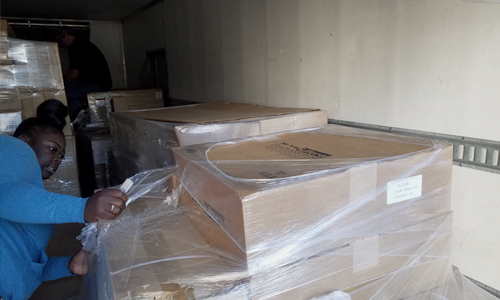
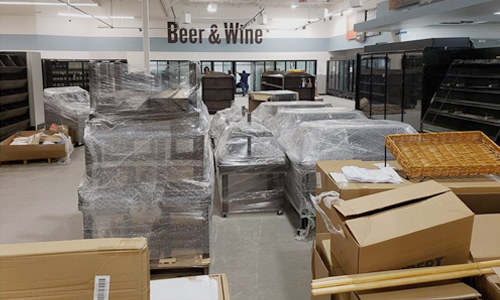
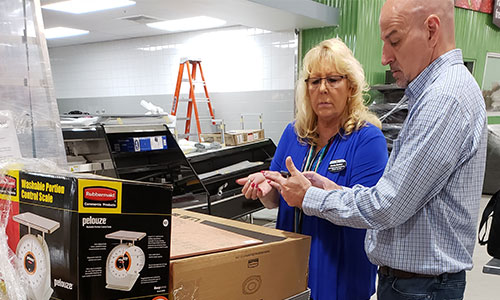
I then conducted an evaluation of the existing order fulfillment process. I wanted to ensure we preserved what worked and identify what didn't. I started at the customer order made either online or by phone. From there, I followed to Hubert's customer service team who reviewed the products to confirm available stock, and then onto the warehouse team where items were picked, pack and shipped. Lastly, I traveled to receiving store locations across the United States in order to observe the process in person.
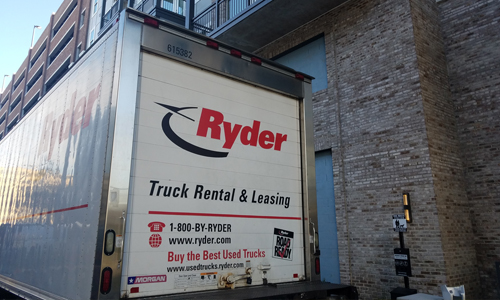
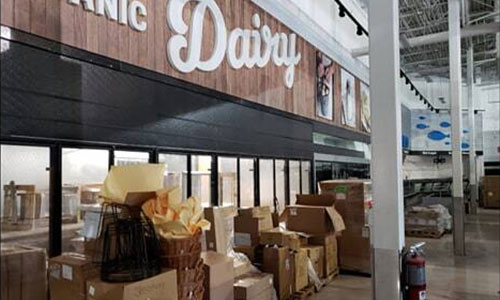
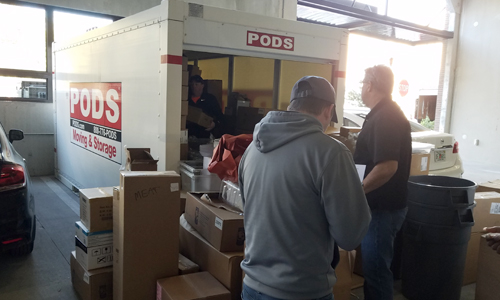
These Efforts Lead To Identifying The Following Key Pain Points:
- Lacking knowledge:
Customers responsible for ordering products are often not the one who receives them. This disconnect translated into the receiver lacking a fundamental level of knowledge about the incoming order and the items in it. - Vague item descriptions:
Orders are shipped with text only packing slips that use item SKUs and VPNs as their primary identifiers. When combined with the initial lacking knowledge about the order, this triggered time-consuming research efforts on the part of the receiver in order to better identify unfamiliar products. - Unclear organization:
Products ordered in high quantity such as serving spoons are often separated into multiple locations across the store, but listed as a single quantity on the packaging slip. This frequently triggered confusion on the part of the receiver and required lengthy trips through the store looking for the remaining product quantities.
The Hypothesis
By creating a tool that provides detailed product information specific to orders for customer team members who are ready to receive the purchasers orders, we will see a decrease in the level of Hubert involvement in customer check-ins due to a greater level of confidence and teamwork at the receivers level, and an overall reduction in check-in times on the day(s) of check-in.
Ideation
With a customer-driven hypothesis in place, I gathered a team consisting of stakeholders, developers, and customer service members to begin generating potential solutions. Using IDEO's design thinking methodology, I served as a facilitator for my teammates through exercises such as, "How might we?", "Worst possible idea", and "Brainwriting". Within the next few hours we came to the agreement that the best potential outcome for our customers would be a digital tool that allowed them to communicate between team members within and outside of the store location.
Sketching out parts of the whole:
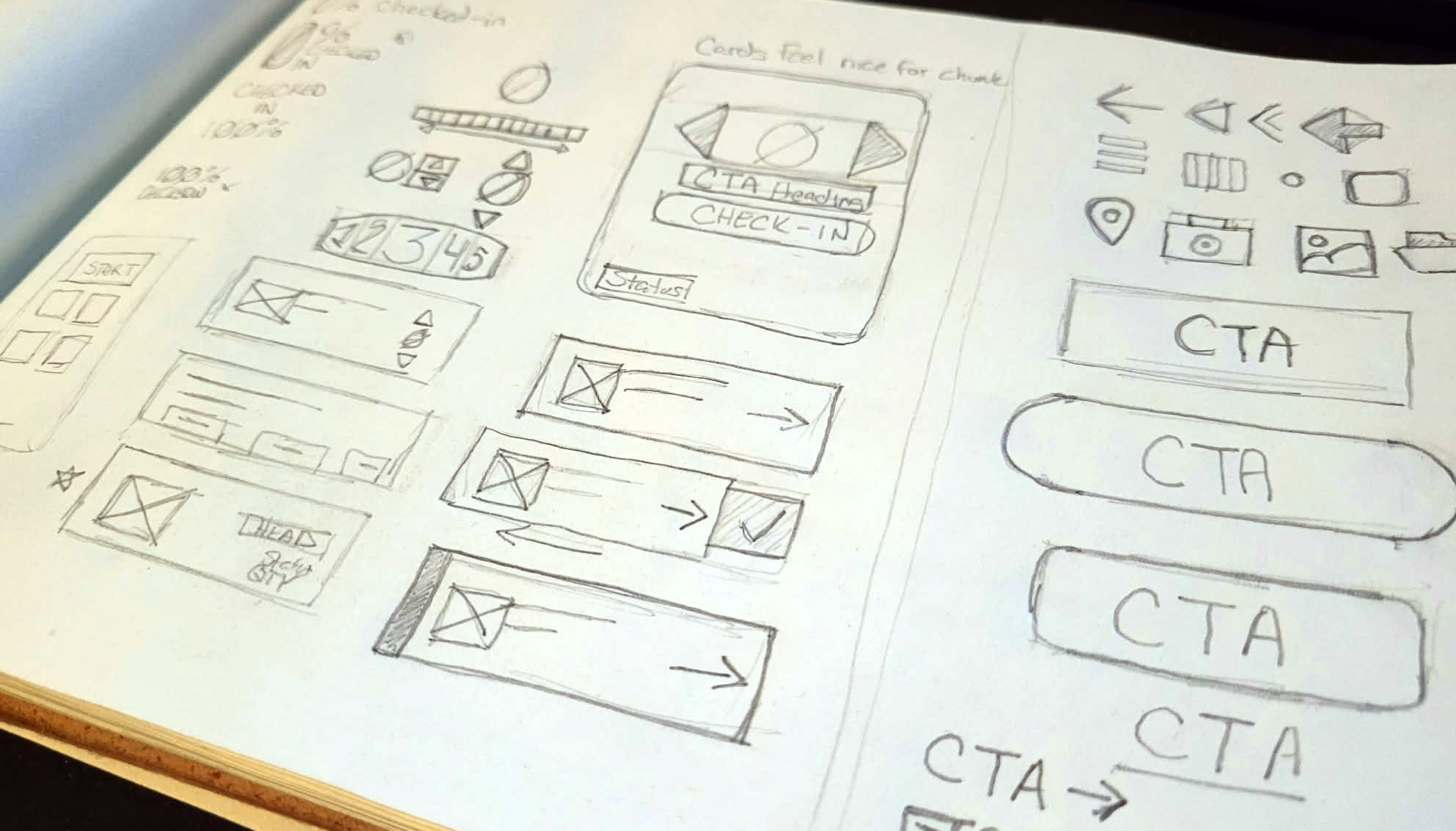
I am a fan of the Atomic Design methodology. So as a personal exercise, I set a timer, sat down with a sketchpad, and started drawing smaller elements of the interface inspired by the team's ideas and the customers' feedback. I focused on elements that would allow the receiving customer to check-in individual items while also expanding on delivering product information. These sketches slowly became a simplified design library to generate a low-fidelity prototype for the team to review.
Testing The Prototypes
The low-fidelity prototype below was a good starting point for internal feedback. I was able to run a set of internal usability tests in order to obtain general feedback and gain additional clairity around key features.
I used the gathered internal feedback to create a high-fidelity prototype that was ready for developer review. Over the next few weeks, I worked alongside the developers to create a live data prototype we could use at upcoming customer check-ins. Each visit was heavily documented to note where we had improved on the process, but more importantly where we missed the mark. We continued to iterate between each visit and trends began to surface that we were on the right track to improving our customer's check-in experience.
Outcomes & Next Steps
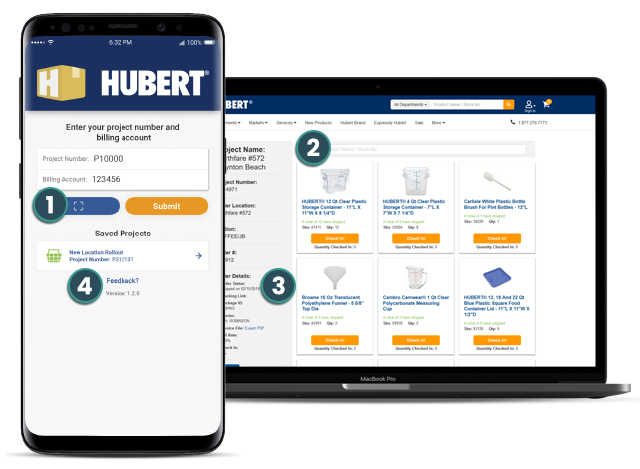
The result of all this effort was the Hubert Projects app. From a desktop, Apple or Android device our customers can browse any delivery location, review an order's status, and track it at every step of the journey. Through the app's connection to the Hubert Enterprise Resource Planner (ERP), customers are provided with live updates alongside a truckload of tools like:
- Barcode/QR scanning for quick order and item access within the app.
- The ability to search orders visually with high quality product images.
- Clear organizational structures custom to each store in order to help receivers locate high quantities of items separated by area.
- And features facilitating product feedback in the case of missing or damaged items that go immediately to that customer's service representative for replacement.
Now that the app is in the hands of everyday customers we are gathering valuable user data in order to iterate and improve on its already game changing features. The team continues to onboard new and existing customers, which is pushing the customer adoption rate higher.
By using the Hubert Projects app we continue to reduced the mental stress of one our customer's busiest days and allowed them to work faster and more efficient than ever before.
%
Customer adoption rate
Reduction in customer service calls
Hours on average saved at check-in
Wanna know more?
Get in touch and we can set up a call to explore how a tool like this might benefit your business.